REVIEWS
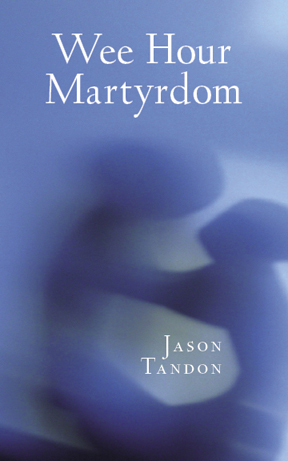
"So you can't judge a book by its cover, but this attractive and comfortably held collection is as clean and as crisp as the poetry it holds inside. The poems are imaginative and artfully crafted with vivid imagery that we should see beyond the realm of realism if we were to simply turn an object slightly askew.”
—Poesia
"Wee Hour Martyrdom is a showcase of accessible poetry. Yet the writing is also perceptive, reflective, and profound in the dignity it extends to the banal routines of existence. This is a collection I recommend to non-poetry readers who maintain their distance from the genre, whether due to a fear of ambiguity in meaning or disinterest in the elusive language of poetry—a language that seems always to snake away from hesitant eyes. Tandon’s articulation, even in the dreamlike worlds he crafts, is available and inviting, a device that feels simultaneously epiphanic and familiar.”
—Prick of the Spindle
"Less is more—a commonly repeated proverb. In Wee Hour Martyrdom, poet and award winning author Jason Tandon aims to follow that wisdom with his vivid, and deftly crafted poetry. Tackling the simple emotions and challenges of human behavior, Tandom touches on it all. Wee Hour Martyrdom would make a fine addition to any poetry fan's collection and community library collections as well.”
—Midwest Book Review
"This is a book about everyday life, and how painful or pleasant it can be. [Tandon] has the ability to observe situations and paint such vivid pictures no matter how small or meaningless the situation may be.”
—What to Wear During an Orange Alert?
"Jason Tandon causes me to laugh, or my causal laughter, which ever way i’m suppose to say this; the first few poems lift my young spirit. ... Wee Hour Martyrdom drives the reader into the mystery of being, of being influenced by history, personal as well as the history of a particular genre of poetry. in this book I relate to the surreal images and a more contemporary emphasis. ... you will dive into this book and come out assured by its’refreshing, clean, nakedness. ”
—Boston Area Small Press and Poetry Scene
INTERVIEWS
Jason was interviewed by Doug Holder on Poet to Poet / Writer to Writer (also published in The Somerville News).
BLURBS
“Jason Tandon’s Wee Hour Martyrdom presents the reader with a delightfully imaginative re-imagining of the everyday in language that is straightforward yet reveals such wonderful images that one cannot help but read the poems over and over, gaining a new perspective each time.”
—Raymond Hammond, editor of The New York Quarterly
“Jason Tandon displays the rare talent of being able to weave his own history into many other histories while displaying a staggering command of language and music. His lines have a spark that constantly fires and keeps you engaged and curious. The word you didn’t expect always appears, but it’s always the right word. His work is lively and deserves to be read, and I hope many new readers discover him in this excellent book.”
—J. E. Pitts, poetry editor of The Oxford American and VOX
“Tandon’s poems hover upon the knife-edge of a sort of hypnagogic realism, where the world to one side appears as the daily world of stories and objects, but the gaze is turned a bit to the other side, revealing the world’s disquieting, true nature, so that it’s always some wee hour where the people are ‘pointing to the smoke rising from the far-off trees.’ It’s a persuasive view, this other side, into which there is, at all moments, the possibility we might disappear.”
—John Gallaher, editor of The Laurel Review
(nudged).jpg)